
Canadian homes face a unique combination of moisture, seasonal humidity changes, and temperature fluctuations. For contractors and builders, these conditions make cabinet material selection especially important. A kitchen that looks excellent at installation can develop swelling, warping, joint movement, or finish problems if the cabinetry is not designed for the local environment.
Choosing the right wood kitchen and cabinet construction can help improve durability while delivering the warm, premium appearance homeowners expect. The key is not simply selecting a particular species of wood. Cabinet performance depends on the entire system, including the core material, veneer or solid wood components, edge treatment, finish, hardware, construction method, and installation.
For residential projects in Canada, contractors should evaluate wood kitchen cabinet solutions based on both aesthetics and long-term moisture resistance.
- Why Humidity Matters for Kitchen Cabinets in Canada
- Choosing the Right Wood Kitchen Cabinet Materials
- The Best Wood Cabinets Combine Material and Construction
- Design Considerations for Humid Canadian Homes
- Matching Cabinet Style With Project Requirements
- What Contractors Should Check Before Ordering
- In Conclusion
- FAQs about wood kitchen cabinets
Why Humidity Matters for Kitchen Cabinets in Canada
Wood is a natural material that responds to changes in moisture content. Canadian homes may experience significant indoor climate changes throughout the year, particularly between cold, dry winters and humid summers.
In kitchens, moisture exposure can be even greater because of cooking, dishwashing, steam, and occasional water spills. Cabinets installed near sinks, dishwashers, and exterior walls may face higher moisture loads than cabinetry in other areas of the home.
When cabinetry is poorly specified or installed, excessive moisture can contribute to:
- Door and panel movement
- Swollen cabinet components
- Warped doors and drawer fronts
- Delaminated edges or veneers
- Loose joints and hardware
- Finish deterioration
- Mold or mildew concerns in persistently damp conditions
For builders, the goal should be to select cabinet systems that accommodate normal environmental movement while minimizing the risk of moisture-related damage.
Choosing the Right Wood Kitchen Cabinet Materials
Not all wood-based cabinet materials perform the same way. A professional specification should consider where each material is being used and how much moisture exposure it is likely to receive.
1. Solid Wood

Solid wood remains a popular choice for cabinet doors, frames, and decorative components because of its natural appearance, strength, and ability to be refinished.
Common options include oak, maple, walnut, and other hardwood species. Maple and oak are particularly popular in Canadian residential interiors because they provide durability and versatile design options.
However, solid wood is not inherently moisture-proof. Like all wood products, it expands and contracts with changes in humidity. Proper kiln drying, construction techniques, finishing, and installation are therefore essential.
For contractors, solid wood is often best used selectively rather than assuming that a kitchen made entirely from solid wood will automatically provide superior performance.
2. High-Quality Plywood
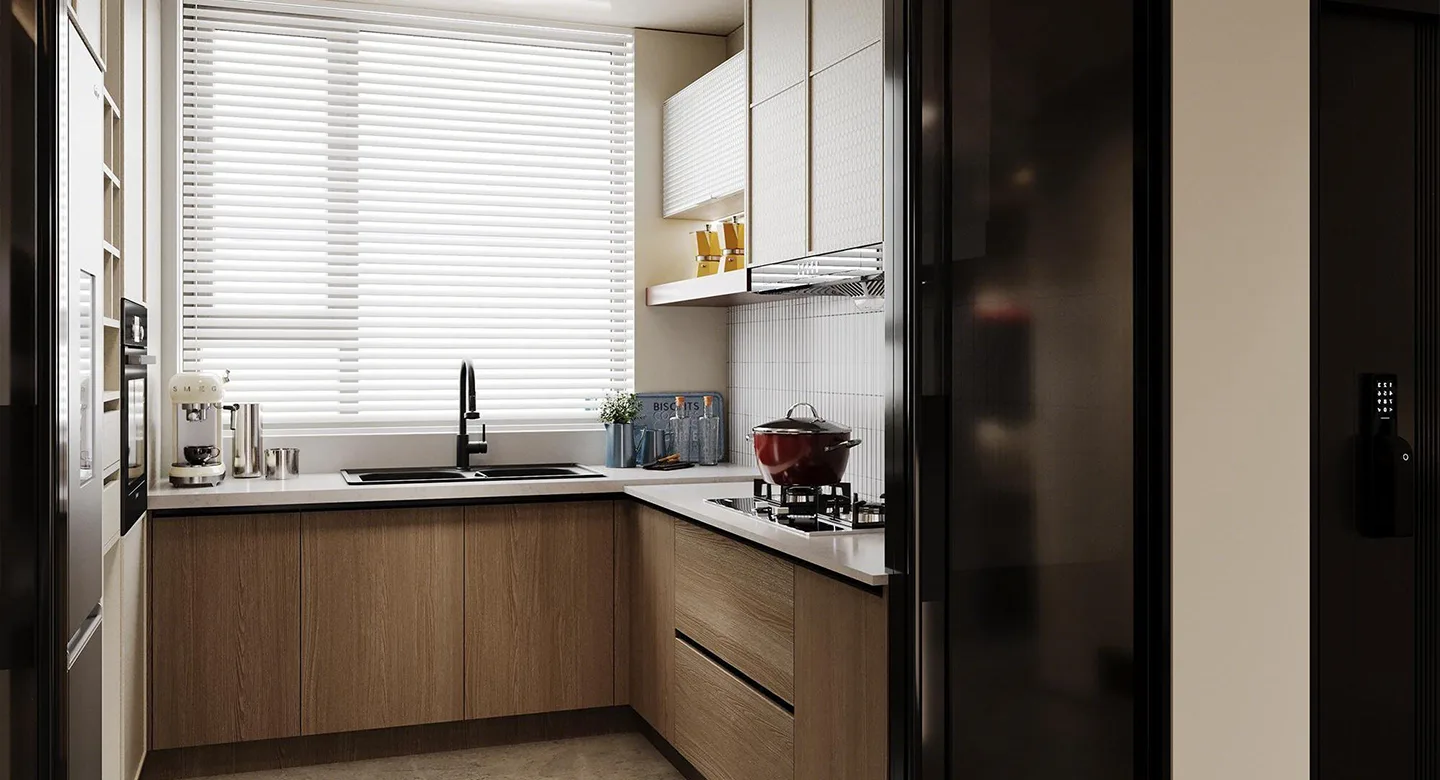
Plywood is another strong option for cabinet boxes and structural components. Its cross-laminated construction provides dimensional stability and strength, making it suitable for demanding residential applications.
For humid kitchens, quality plywood can offer several advantages:
- Good structural strength
- Reliable screw-holding performance
- Reduced risk of large-scale movement compared with some solid wood components
- Suitable performance for cabinet boxes and shelving
The grade and construction of the plywood still matter. Contractors should confirm the actual material specification rather than relying on generic descriptions such as “wood cabinetry.”
3. Engineered Wood Panels
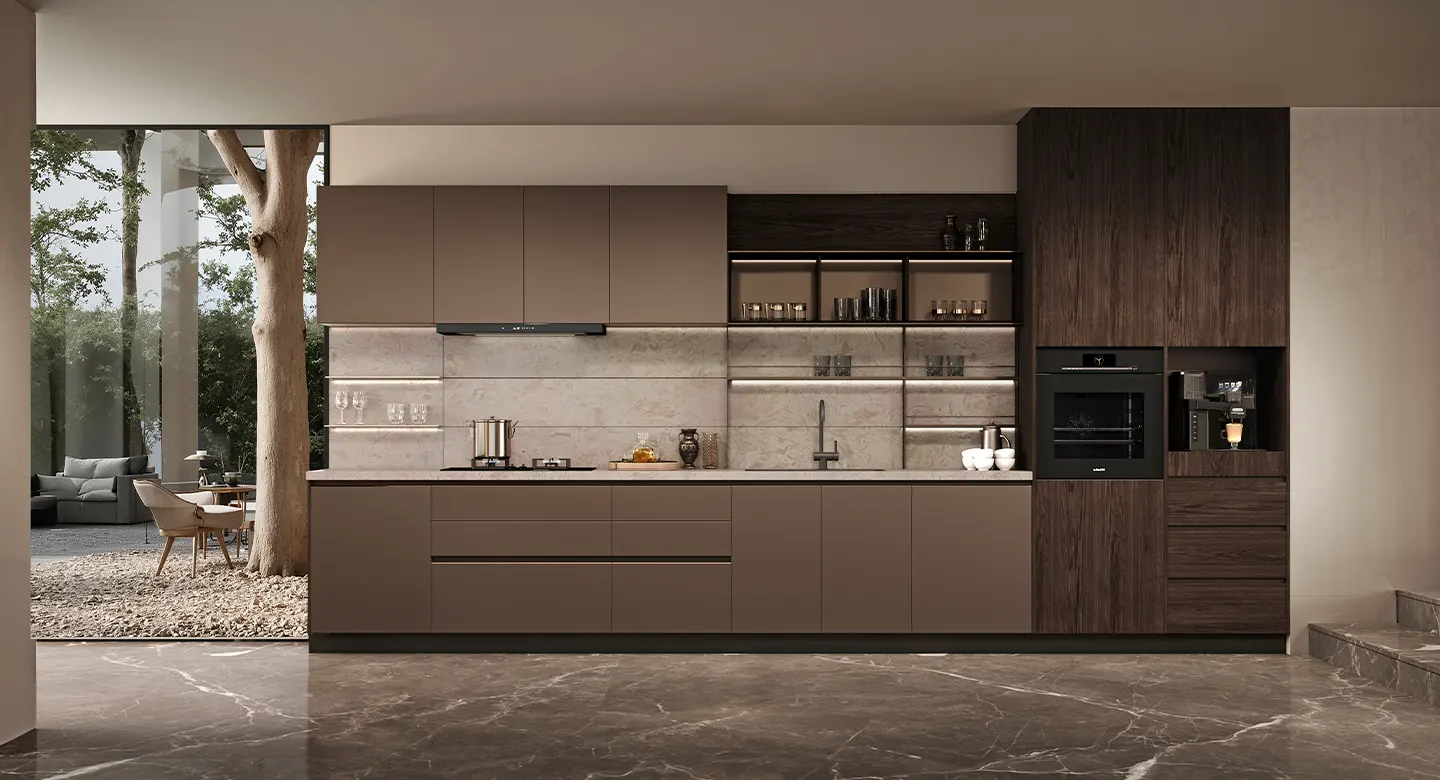
Engineered wood products can also provide excellent cabinet performance when manufactured to appropriate standards and properly finished.
Materials such as medium-density fiberboard (MDF) can offer a smooth, stable surface for painted cabinet doors. High-quality engineered panels are particularly useful for contemporary kitchens where a consistent, seamless finish is required.
However, moisture resistance varies significantly between products. Cabinet components that may be exposed to water should use appropriate moisture-resistant specifications, and vulnerable edges must be properly sealed.
4. Veneer and Laminate Surfaces
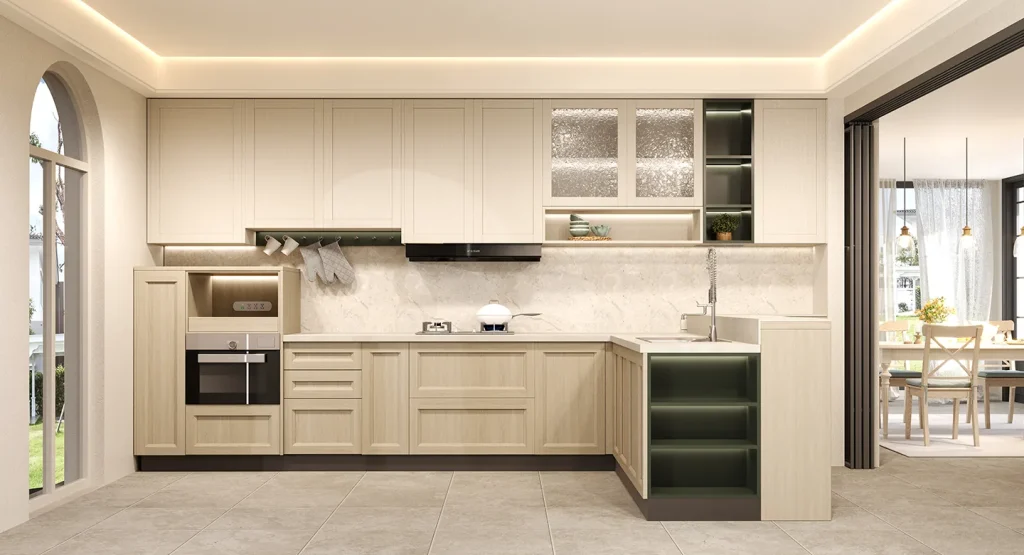
Wood veneer provides the appearance of natural timber while allowing manufacturers to produce more dimensionally consistent doors and panels. A quality veneer applied to a stable substrate can be an excellent choice for modern Canadian interiors.
High-pressure laminate and durable decorative laminates can also perform well in humid environments, especially for cabinet interiors and high-use rental or multi-family projects. The primary concern is not only the surface but also the substrate, adhesive, seams, and exposed edges.
Contractors should verify:
- Whether the substrate is plywood, MDF, or particleboard.
- How edges are sealed.
- Whether the finish is suitable for sink and dishwasher zones.
- How panels are protected from steam and standing water.
- Whether the manufacturer provides installation and warranty requirements.
The Best Wood Cabinets Combine Material and Construction
Material selection is only one part of the equation. Even premium materials can fail when cabinet construction is poorly engineered.
For Canadian projects, contractors should pay close attention to the following construction details.
Sealed Edges and Finished Surfaces
Edges are often more vulnerable to moisture than fully finished panel surfaces. Proper edge banding, sealing, and finishing can reduce the chance of moisture penetrating the substrate.
This is especially important around sinks, dishwashers, and other areas where condensation or occasional water exposure is expected.
Durable Finishes
The cabinet finish should match the intended use of the kitchen. A quality finish protects the underlying material while providing resistance to everyday stains, cleaning, and moisture.
For natural wood cabinets, the finish should preserve the appearance of the grain while creating an effective protective barrier. For painted cabinetry, a properly prepared and cured coating system is essential for long-term performance.
Strong Joinery
Cabinet joints need to remain stable as materials respond to seasonal environmental changes. Reliable joinery and accurate manufacturing help maintain alignment and reduce movement over time.
Builders should also look at drawer construction, hinge mounting, cabinet connections, and fastening systems rather than evaluating cabinetry based solely on door style.
Design Considerations for Humid Canadian Homes
A durable kitchen should be designed around the home’s actual conditions.
Pay Attention to High-Moisture Zones
Cabinets immediately adjacent to sinks and dishwashers deserve additional consideration. Contractors should ensure that plumbing connections are properly sealed and that leaks can be detected before they cause extensive cabinet damage.
Protective installation details, including appropriate sealing around penetrations and careful alignment of appliances, can significantly improve the service life of cabinetry.
Allow for Proper Ventilation
Good kitchen ventilation is important for controlling indoor humidity. Range hoods should be appropriately specified for the cooking environment, and homeowners should be encouraged to use ventilation during and after cooking.
Cabinet materials cannot compensate for consistently excessive indoor humidity. A well-designed kitchen combines suitable cabinetry with effective moisture management.
Consider Seasonal Movement
Doors and drawer fronts may experience minor movement as humidity changes. Quality cabinetry should be manufactured with these natural characteristics in mind.
Contractors should avoid specifications that rely on unrealistic assumptions about wood remaining completely dimensionally static throughout the year.
Matching Cabinet Style With Project Requirements
The best cabinet solution also needs to meet the project’s design objectives.
For traditional Canadian homes, natural oak, maple, or walnut cabinetry can create a warm and timeless interior. For modern builds, flat-panel doors, minimalist hardware, and painted MDF or wood veneer can provide a cleaner architectural appearance.
Veneered wood cabinets are particularly useful when a project requires the visual character of natural timber with greater consistency across larger surfaces. Carefully selected veneer can create a high-end appearance while reducing some of the challenges associated with using large solid-wood panels.
For contractors managing multiple residential projects, custom cabinetry can also simplify coordination. Cabinet dimensions, storage layouts, finishes, and complementary interior elements can be specified as one cohesive package.
What Contractors Should Check Before Ordering
Before approving a wood kitchen cabinet supplier, builders should request detailed specifications rather than comparing suppliers on appearance and price alone.
Important questions include:
- What material is used for the cabinet box?
Confirm whether the construction uses plywood, MDF, particleboard, or a combination. - What materials are used for doors and drawer fronts?
Determine whether they are solid wood, veneer, MDF, or another engineered material. - How are exposed edges protected?
Ask about edge banding, sealing, and finishing. - What finish is applied?
Review its durability and suitability for kitchen environments. - How are cabinets joined and installed?
Construction and installation quality have a direct effect on long-term performance. - Can the manufacturer provide consistent custom dimensions?
This is particularly important for new construction and renovation projects with non-standard layouts. - Is after-sales support available locally?
A reliable local support network can make project coordination and issue resolution much easier.
In Conclusion
Selecting cabinetry for a Canadian home requires more than choosing an attractive wood species. Contractors and builders should consider the complete cabinet system, including substrate, wood components, finishes, edge protection, hardware, joinery, ventilation, and installation conditions.
The best wood kitchen cabinet solution balances aesthetics, structural stability, moisture management, and project requirements. High-quality plywood, properly finished engineered wood, solid hardwood components, and premium veneers can all be effective when correctly specified and manufactured.
OPPEIN Canada provides whole-home solutions, including custom cabinets, closets, vanities, interior doors, and furniture. With showrooms in Ontario and Vancouver, OPPEIN Canada supports contractors and builders looking for coordinated solutions for residential projects.
If you are looking for a reliable partner for your residential project, look no further than OPPEIN Canada. Download the latest catalog and contact us for a free quote. Leave us a message or visit your local showroom to discuss your project requirements, cabinet specifications, and whole-home furnishing solutions.
FAQs about wood kitchen cabinets
High-quality plywood, properly finished solid wood, wood veneer, and moisture-resistant engineered wood can all be suitable for Canadian homes. The best choice depends on the cabinet location, construction quality, finish, and expected moisture exposure.
Yes. Wood cabinets can perform well in humid climates when they are properly manufactured, finished, sealed, and installed. Good kitchen ventilation and stable indoor humidity are also important for minimizing seasonal movement and moisture-related issues.
Plywood can offer excellent dimensional stability and structural strength, making it a practical choice for cabinet boxes. Solid wood is often preferred for doors and decorative elements because of its natural appearance. A combination of materials can provide a good balance of durability, performance, and aesthetics.
Contractors should specify appropriate cabinet materials, seal exposed edges, use durable finishes, properly install cabinets around sinks and dishwashers, and ensure plumbing connections are protected against leaks. Effective kitchen ventilation also helps control indoor humidity.
Custom wood cabinets can be manufactured to match specific room dimensions, appliance locations, storage requirements, and design preferences. For builders and contractors, custom cabinetry can also help create a consistent design across kitchens, closets, vanities, interior doors, and other areas of the home.